
From Watercolour to Oil: How I Taught Myself to Paint


I was six years old the first time I held a paintbrush with intention. Not just to scribble or play — but to create. My first love was watercolour. Something about the way the colours moved with water, soft and unpredictable, felt like magic. I didn’t know technique, or rules, or what “good art” was supposed to look like. I just knew that painting made me feel something nothing else could.
I didn’t have formal lessons. I didn’t grow up in a home filled with art materials or private tutors. What I had was curiosity — and a quiet, stubborn desire to express what I didn’t know how to say out loud. So I taught myself. I observed, I experimented. I ruined paper. I mixed strange colours. And I tried again.
By the time I was ten, I found oil paint — or maybe it found me. And everything changed.
⸻
🎨 Why Oil?
Oil painting felt like the opposite of watercolour — thicker, slower, more demanding. It terrified me at first. The colours didn’t flow; they had to be shaped. There was no undoing a brushstroke with water. But I loved how the colours stayed rich. How I could build layers slowly and intentionally. How I could come back to a painting days later and keep working on it, still wet, still alive.
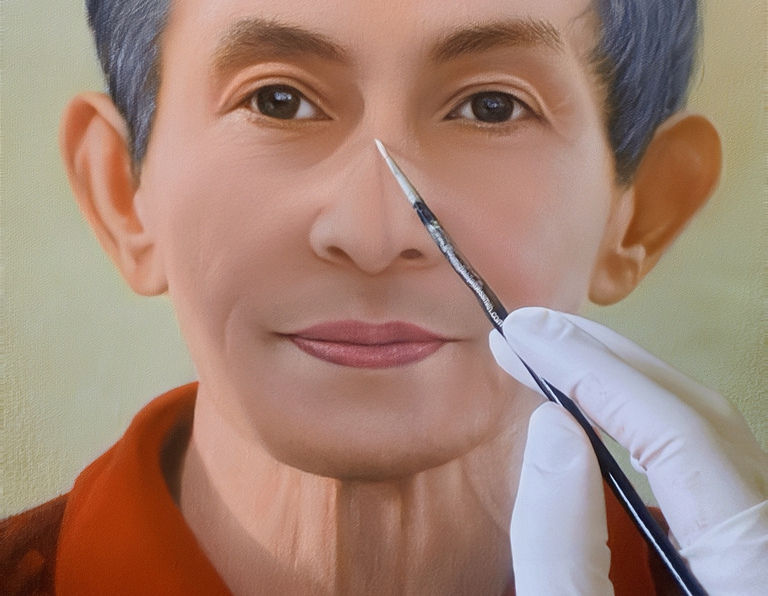
I started studying portraits in books. Not how-to guides — just old masters, faces full of light and story. I would sit and try to mimic what I saw: the shadows under eyes, the curve of a lip, the emotion in a gaze. I didn’t always get it right, but I was learning through doing. And each time I painted, something inside me grew quieter… more at peace.
⸻
💡 Learning Without a Teacher
Being self-taught means you become your own teacher and your own critic. I spent countless hours observing light, watching how colours shift on skin in different times of day. I studied photos. I painted the same face more than once, just to understand how to make it feel real.
There was no one telling me when something was “done.” So I learned to trust my instincts. If it didn’t feel alive, it wasn’t finished. If the eyes didn’t carry emotion, I wasn’t there yet.
I also made many mistakes. I overworked paintings, used cheap materials that cracked, blended too much and lost the freshness. But every mistake taught me something that no tutorial ever could. It’s through doing that I found my voice.
⸻
🎭 What Hasn’t Changed
What’s stayed the same, all these years later, is why I paint. Even now, painting is how I understand myself. How I process emotions I don’t always know how to name. It’s the space where I feel safest. When I paint someone else’s loved one, or their pet, or a place that means something to them — I feel a sacred responsibility to see what matters, and to honor it.
Watercolour taught me flow. Oil taught me patience. But being self-taught taught me resilience.
Everything I’ve built in my art journey came from that little girl at six years old, who picked up a brush and said, “Let’s see what happens.”
⸻
🖌️ To Anyone Starting Late or Learning Alone…
You don’t need to have everything figured out to begin. You just need to start. The rest comes in layers — like a good painting.
Learning by yourself isn’t easy. But it builds something you can’t fake: intuition, trust, and a deeply personal connection to your craft. And in time, you’ll look back and realize — you didn’t just teach yourself how to paint. You taught yourself how to see.
—
With heart,
Selina Dinh


Comments